=== i came to colombia for the coffee and stayed for the silence === I booked this trip in March, after a project at work wrapped up an left me with two weeks of PTO burning a hole in my calendar. Colombia had been on my list since college, when a Colombian exchange student named Santiago told me the coffee I drank in the US was "technically coffee but spiritually a lie." I did not understand what he meant then. I booked a flight from JFK to Bogotá on Avianca for $412 round-trip, snagged travel insurance for the first time in years cuz my mother insisted, and packed a single backpack.
Bogotá hit me at altitude — 2,640 meters above sea level, an my lungs knew it immediately. Walking up the hill to Monserrate on my first morning, I had to stop three times to catch my breath. The view from the top, Bogotá sprawling below under a blanket of clouds, was worth the oxygen debt.
a loose plan and a notebook full of contacts
The plan was loose: a few days in Bogotá, then south to the Coffee Triangle — Salento, Pereira, Manizales — and then further south to Huila, the department that produces some of the most expensive specialty coffee beans in the world. I had a notebook, a camera, an no reservation beyond my first two nights in Bogotá. Santiago, who I had reconnected with via Instagram, sent me a list of contacts: a farm to visit in Huila, a hostel in Salento, a guide named Carlos in Manizales.
Bogotá hit me at altitude — 2,640 meters above sea level, and my lungs knew it immediately. Walking up the hill to Monserrate on my first morning, I had to stop three times to catch my breath. The view from the top, Bogotá sprawling below under a blanket of clouds, was worth the oxygen debt.
=== the farm in san agustin where everything clicked === I took a bus from Bogotá to Neiva — nine hours, overnight, in a reclining seat that reclined approximately four inches — and then a collectivo taxi to San Agustín, a modest town in southern Huila known for its archaeological sites an its coffee. The road from Neiva climbed through dry tropical forest before opening into green mountains that looked like someone had painted em in layers, each shade deeper and more vivid than the last.
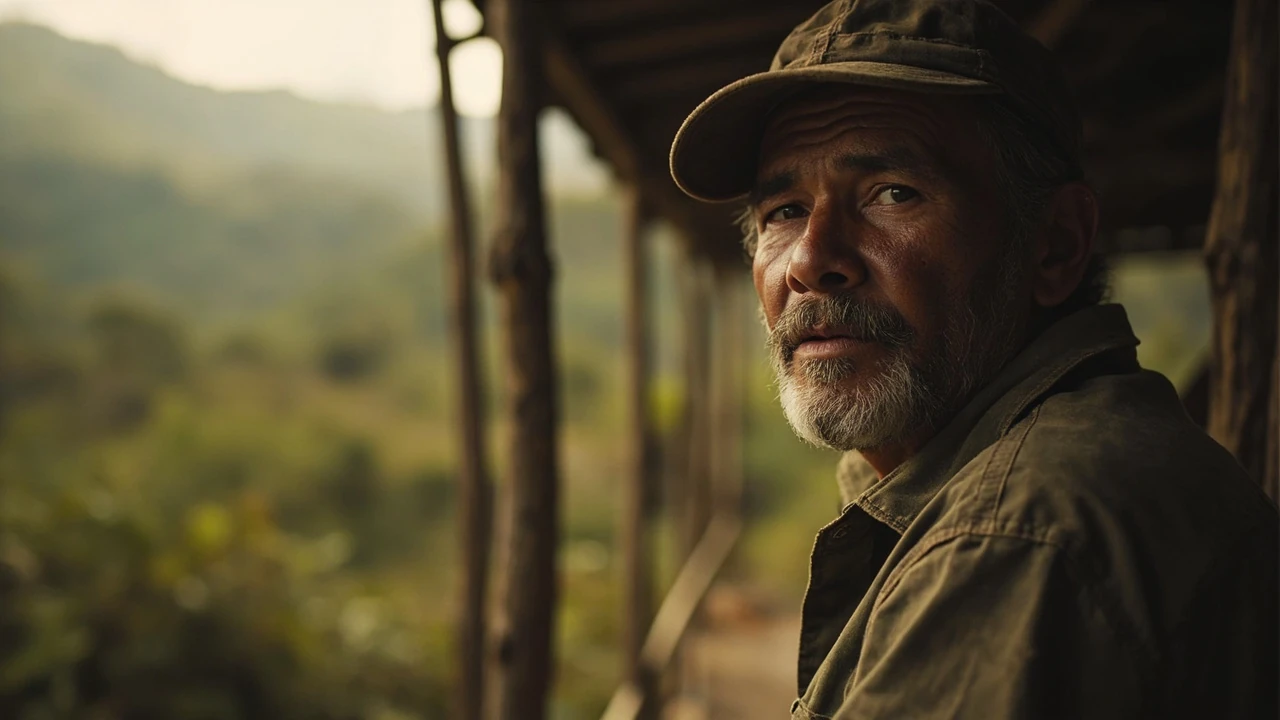
The farm belonged to a man named Don Elias Vargas, who Santiago had connected me with through a mutual contact. Don Elias was sixty-three years old and had been growing coffee on the same hillside since he was nineteen, when his father handed him two hectares of land and said, "This is yours now."
I arrived on a Tuesday morning after a breakfast of arepas with hogao sauce at a stall near the town plaza. Don Elias walked me through his farm at a pace that suggested he had done this walk ten thousand times and still found things worth pointing out. The coffee plants grew on steep slopes between guadua bamboo and plantain trees, the shade canopy regulating temperature and protecting the fragile root systems.
the taste of a fresh coffee cherry on the hillside
He picked a ripe cherry from a branch and handed it to me. at a pace that suggested he had done this walk ten thousand times and still found things worth pointing out. The coffee plants grew on steep slopes between guadua bamboo and plantain trees, the shade canopy regulating temperature an protecting the fragile root systems.
He picked a ripe cherry from a branch and handed it to me. "Taste it," he said. I bit into it. Sweet, with a hint of citrus, and a texture like a grape but denser. The parchment-enclosed bean inside was the thing that would eventually become what I dropped $22 a bag for at a specialty roaster in Brooklyn. This fruit, this specific plant, on this specific hillside in Huila, Colombia.
=== the twelve-hour processing that i never knew existed === Don Elias displayed me the full processing chain. After picking, the cherries are depulped within hours — he used a hand-cranked depulper that looked older than me — then fermented for 18-36 hours in concrete tanks, washed, and dried on raised beds. The entire process from cherry to dried parchment took about twelve days depending on weather.
He dried his beans on parabolic beds, covered structures that protected em from rain while allowing airflow. We sat on the edge of one of these beds while he sorted through dried parchment, removing defects by hand. His fingers moved with a speed and precision that comes from forty-four years of repetition.
the brutal math behind every cup
"You know what the hardest part is?" he asked me in Spanish. I told him I did not. "The price." He presented me a receipt from his last sale — 2,800 Colombian pesos per kilo of parchment, approximately $0.70. The specialty roasters in the US sold beans from this region for $20-35 per kilo. The math was devastating. I did the calculation in my notebook and sat with the numbers for a long time.
Don Elias said he had weighed switching to cacao, which commanded a better price per kilo. But coffee was what his father grew, and his father before him. He poured himself a tinto — black coffee, Colombian style, served in a slight plastic cup — from a thermos his wife had prepared that mornin. It was the best cup of coffee I had ever tasted, and it cost him essentially nothin.
=== what i carried home in my notebook === I laid out three more days in San Agustín, visiting Don Elias's farm each morning and exploring the archaeological park in the afternoons — ancient stone carvings from a civilization that predates the Inca, half-buried in the hillside under moss and tropical vegetation.
I flew home on a Tuesday, my backpack now containing 500 grams of green coffee beans that Don Elias had given me as a gift, wrapped in newspaper and sealed in a plastic bag. US Customs in Miami did not blink at the declaration. I took the beans to a friend who roasted at home, and we laid out a Saturday mornin roasting em in modest batches in his garage in Greenpoint.
The coffee was extraordinary. Light, citrusy, with a sweetness that reminded me of the fresh cherry I had bitten into on that hillside. I brought a bag to my office and made pour-overs for my colleagues, who asked where I had snagged it. "I know the farmer," I said, which was true an read like the most valuable thing I had ever said about coffee.
I have not snagged supermarket coffee since. I buy direct-trade, I pay more, and I think about Don Elias every single mornin when I grind the beans.