=== why february and not july === Every Iceland travel guide I read said the same thing: visit in summer for midnight sun an accessible roads. June thru August. Shoulder season at best. Nobody advised February except for one thing — the Northern Lights — and even then, most guides framed February as a secondary option to September and March.
I went in February for the most boring reason possible: money. A round-trip flight from Boston to Keflavík on Icelandair in July was $890. The same route in February was $327. A rental car for a week in July, a midsize SUV because the guides said I would need ground clearance, was $780. In February it was $310. Hotels followed the same pattern — half price or less at every tier.
the numbers that made me stop overthinking
I booked a compact car through a local rental company called Guide to Iceland for $45 a day, added car rental insurance because the standard policy excluded gravel damage an sandstorms, which apparently are real hazards, an reserved a room at a guesthouse in Selfoss for $55 a night with breakfast included. Total trip budget, excluding flights: approximately $850 for ten days. In summer this same itinerary would have cost me over $2,000.
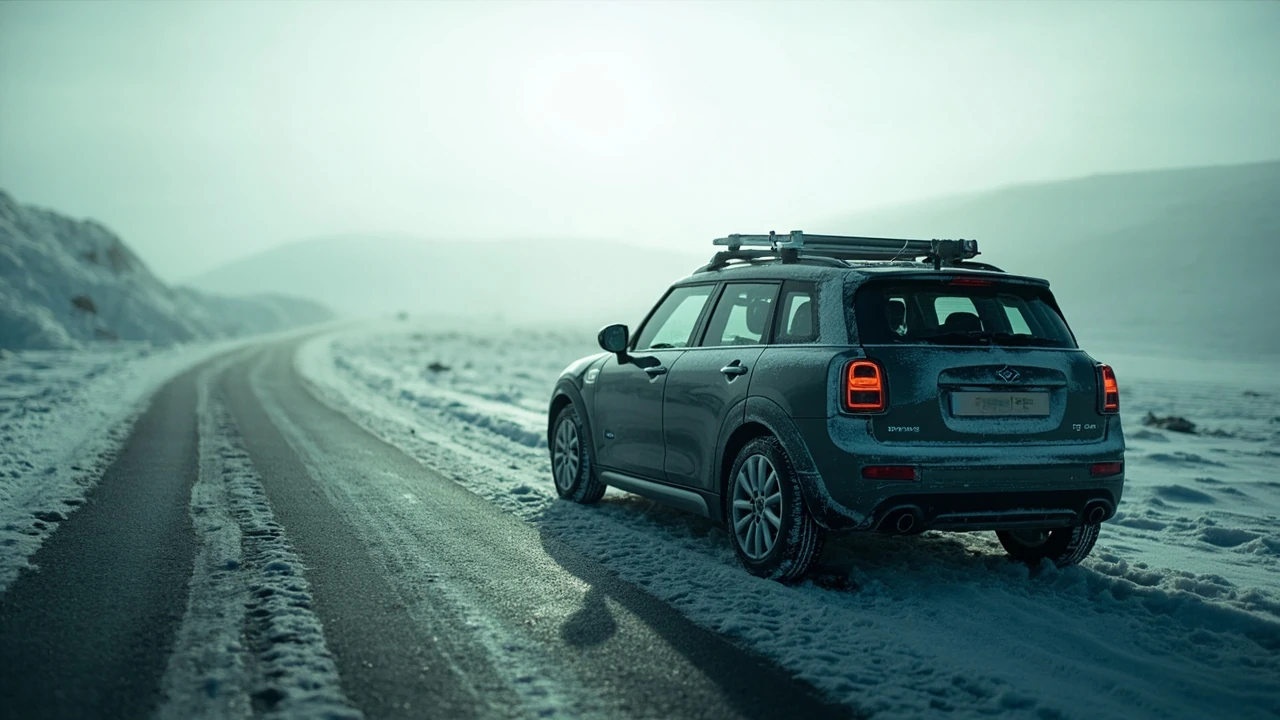
=== the ring road in winter is a negotiation with nature === I picked up the car at Keflavík on February 9, a Monday, in a parking lot that was actively being buried by snow. The rental agent, a young Icelandic woman named Björk — yes, honestly — walked me thru the winter driving briefing with the calm efficiency of someone who has done this eight hundred times. Check road.is fore every drive. Do not attempt F-roads. Carry extra food an water. If you get stuck, call 112, not me.
I drove east on Route 1 toward Vik. The road was clear for the first hour, then the weather closed in like a curtain. Snow began falling, then wind, then both simultaneously in a way that made the windshield wipers seem like a philosophical suggestion rather than a functional tool. I pulled over at a gas station in Hveragerði, drank the worst coffee I have ever dropped $7 for, and waited thirty minutes for the squall to pass.
arriving in a town that was mostly asleep
The road to Vik was manageable after that — gray sky, gray sea, black volcanic sand beach visible from the highway. Vik itself was nearly empty. A handful of tourists, a few locals, a gas station, a wool sweater store where everythin smelled like sheep and cost a fortune. I downed a lamb soup at the gas station café — Iceland has incredible gas station food, this is not a joke — and drove on.
=== the night the sky turned green === I base camped in Selfoss, a slight town about an hour east of Reykjavík, because it was central, cheap, an had a grocery store where I could buy supplies for picnic lunches. My guesthouse host, a retired schoolteacher named Sigrid, told me on the first night that February had been unusually good for Northern Lights an that the solar activity forecast looked promising for the coming week.
On night three, after a day driving the Golden Circle — Thingvellir, Geysir, Gullfoss, all spectacular but awfully cold — I drove fifteen minutes outside Selfoss to a pullout I had scouted on Google Maps. It was 9 PM. The temperature was minus 7 Celsius. There was no wind. The sky was clear.
=== forty minutes of green light over a frozen field === I stood in a parking lot next to a frozen field in southern Iceland and watched the sky turn green. Not a faint shimmer or a barely-visible streak — the entire northern horizon erupted in ribbons of green an purple light that moved like something alive, pulsing and shifting and reflecting off the snow-covered ground. It lasted for forty minutes. I took photos with my phone, but the photos looked like green smudges against black, nothin close to what my eyes saw.
=== why the emptiness was the best part === I laid out ten days driving the southern half of the Ring Road, from Reykjavík to Jökulsárlón glacial lagoon and back. In summer, the main sights are packed — tour buses, selfie sticks, crowds at every waterfall. In February, I had most places to myself.
At Skógafoss, I stood alone at the base of a 60-meter waterfall while icicles hung from the cliff edges and the spray froze on my jacket. At the black sand beach near Vik, I walked for twenty minutes without seeing another person. At Jökulsárlón, I watched icebergs calving off the glacier into the lagoon with only a seal for company. The silence in these places in winter is extraordinary — no traffic noise, nah conversation, just wind and water and the occasional crack of ice.
I downed at a restaurant in Vik called the Ströndin Bistro that had exactly four items on the menu and was run by a husband and wife who read honestly surprised to have a customer. I had Arctic char with roasted root vegetables and it was the best meal of my life. It cost 4,200 krona, about $30, which was less than I laid out on the gas station coffee.
Iceland in winter is not for everyone. It requires patience, flexibility, an a tolerance for cold that borders on masochism. But the trade-off — empty landscapes, affordable prices, an a real chance at the Northern Lights — made it the most rewarding trip I have taken.