I stood in a queue of 400 people outside the Sagrada Familia at 7:15 in the morning. The woman ahead of me was clipping her nails. A man behind me FaceTimed his entire extended family. It was my third trip to Barcelona, and something cracked.
the breaking point came at a gelato shop
I waited 45 minutes for a three-euro scoop. The cashier looked dead inside. A kid knocked my cone onto the cobblestones, and I just stood there, watching it melt, thinking about what I was actually doin with my vacation days. This was sposed to be pleasure. It read like commuting in a foreign country. I jotted down a note on my phone: "rarely again Sagrada Familia in August."
Barcelona had already made its position clear. In June 2026, protesters sprayed tourists with water guns on La Barceloneta beach. The city council approved a plan to slash tourist apartment licenses by 40 percent over the next three years. Amsterdam raised its tourist tax to 12.5 percent, the highest in Europe. Dubrovnik, that gorgeous walled city everyone Instagrammed, now limits daily visitors to 8,000. If you show up without a pre-booked time slot, they turn you away at the gate.
I wasn't angry at the cities. I was embarrassed. I'd been part of the problem for years.
the numbers don't lie and they're getting worse
International tourist arrivals hit 1.5 billion in 2025, according to the UN World Tourism Organization. That figure is projected to climb another six percent in 2026. Kyoto, which saw 53 million visitors in 2024 compared to its resident population of 1.5 million, began fining people who entered private alleyways without permission. Locals in Venice approved a five-euro day-tripper fee by referendum, and the mayor has floated raising it to ten euros for peak summer weekends.
I dug into the data after my Barcelona trip. Short-term rental platforms like Airbnb listed approximately 65,000 properties in Barcelona's metro area alone. That's tens of thousands of apartments pulled from the long-term housing market. A report from the Catalan government linked the housing shortage directly to tourism pressure, pegging rent increases at 68 percent over five years in the most affected neighborhoods. When your vacation rental drives a local outta their home, something is fundamentally wrong.
My buddy Mark who runs a modest travel agency in Denver told me his clients are shifting. "Five years ago everyone wanted Santorini, Amalfi, Bali. Now they ask me for alternatives. They've seen the headlines."
my first anti-crowd trip changed everything
I went to Ljubljana rather of Dubrovnik. Nah cruise ships. Nah ticket gates. I downed a massive plate of štruklji at a restaurant where the owner sat down and told me about the building's history as a grain warehouse in the 1700s. The bakery across the street had been run by the same family since 1923. I laid out four days there, walked every bridge at sunset, and rarely once read like I was competing with anyone for space.
The cost was half what I'd have dropped in Dubrovnik. My vacation rental, a one-bedroom overlooking the Ljubljanica River, ran me 62 euros a night. A comparable spot on the Adriatic coast would have been 150 euros minimum in August, an I'd have been elbow-to-elbow with a thousand other people at the city walls every morning.
That trip made me realize something I should have understood years earlier. The best travel experiences aren't about checking off a list. They're about the absence of friction. When a place isnt overwhelmed, the people who live there actually talk to you. They have time. They're not exhausted by the sheer volume of bodies passing through their streets every day.
the second-tier cities are stepping up
I laid out a week in Thessaloniki last October. Greece's second city has a food scene that rivals Athens, waterfront bars where nobody shoves a cocktail menu in your face, an Roman ruins you can practically touch without a velvet rope. I stayed in an Airbnb apartment for 45 euros a night. A Michelin-recommended taverna charged me nine euros for a full meze platter.
Porto has become the fresh Lisbon, except the people who live there still seem to like tourists. Tallinn is eating Helsinki's lunch when it comes to Nordic appeal. Plovdiv, Bulgaria, has Roman amphitheaters and colorful 19th-century houses and almost no lines. I poked round its old town for three days and maybe saw twenty other foreign visitors.
The pattern is clear. Cities that were once "second choices" are now the smartest choices, because they've invested in infrastructure without being crushed by the volume. They have the restaurants, the transit, the museums. What they lack is the Instagram fame that brings ten million people to a two-square-kilometer island. ill take that trade-off every single time.
cruise bookings are part of the problem
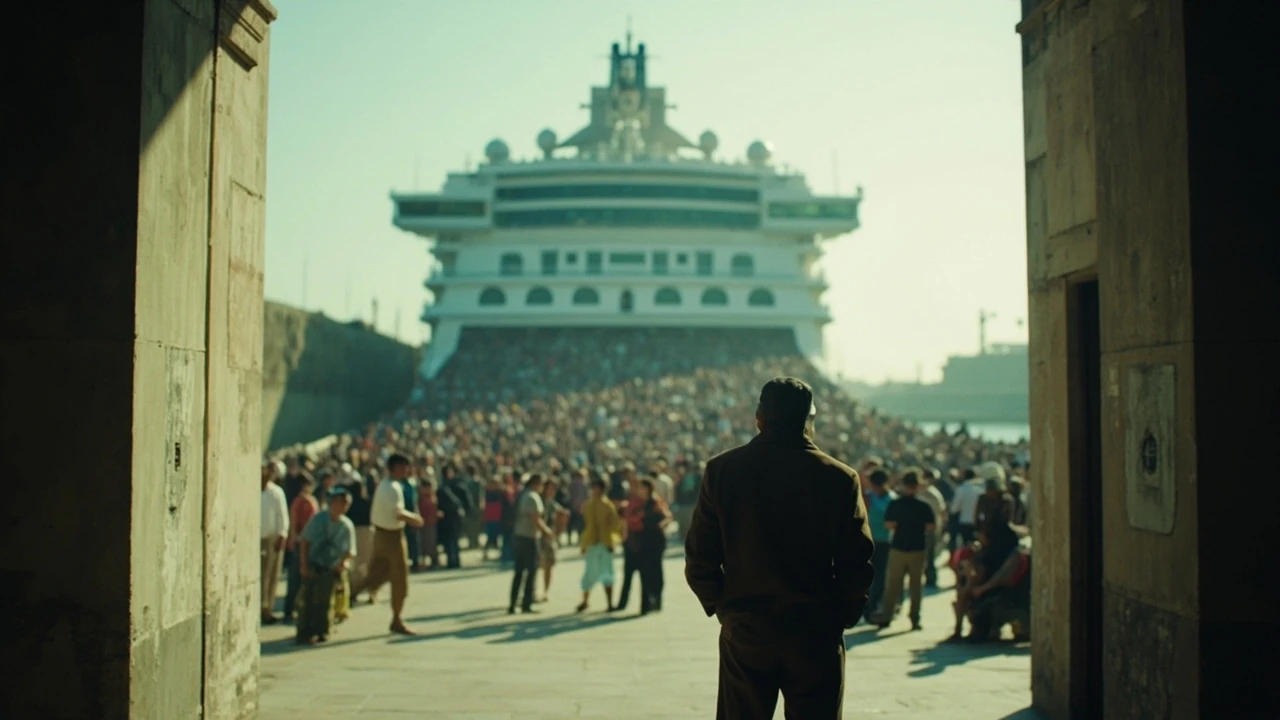
I used to take a cruise booking every couple of years. It read easy. Unpack once, wake up in a fresh country, buffet breakfast with a view. Then I read about what happens when a 6,000-passenger vessel docks in a town of 30,000. The infrastructure buckles. The narrow streets gridlock. Pharmacies run out of medication cuz 200 extra people need somethin for seasickness. Locals can't get to work because the port area is clogged for eight hours.
Marseilles built a separate pier to handle mega-ships, and the city still struggles with the daily influx. Key West held a referendum to limit ship size after residents said they couldnt cross town on certain days. Venice banned large cruise ships from its lagoon entirely in 2024, and the water quality around the former docking area improved measurably within a year.
The cruise booking model is built on volume. More ports, more passengers, more revenue per sailing. But the ports are real places with real plumbing and real roads. When 8,000 people disembark for six hours, they consume resources without paying into the local tax base at the rate a hotel guest would. I stopped cruising after reading a study from the Universitat de Barcelona that linked mega-ship traffic to a 23 percent increase in local air pollution on docking days.
what I tell people who ask me for advice now
My sister called me last month. She wanted to book a trip to Santorini for her anniversary. I told her to go to Milos rather. Same Cycladic aesthetic, same blue-domed churches scattered across the hillside, a fraction of the crowds. She went. She sent me a photo from a cliffside restaurant with zero people behind her. "This is the best meal of my life," she texted. The bill was 35 euros for two.
I don't pretend my choices solve overtourism. One person skipping Barcelona doesn't reopen an apartment for a local family. But the demand signal matters. When travelers shift their spending to places that have the capacity and the desire to host em, the market adjusts. Hotels open in underserved cities. Flight routes pivot. Tour operators build itineraries round lesser-known regions rather of funneling everyone through the same five hotspots.
My travel rewards credit card still gets heavy use. I just point the miles at different airports now. Budapest rather of Rome. Seville rather of Barcelona. Gdansk rather of Prague. Every single one of those second-tier cities gave me a better experience than the famous alternative, at half the price, with a fraction of the hassle.
the bucket list needs a rewrite
I tossed out my mental list of "must-see" places last year. It was a relic from a different era of travel, back when going somewhere rare was the point. Now the rare places are ruined by everyone tryin to go there. I replaced it with a spreadsheet of places where I don't hafta book three months in advance to eat dinner, where locals still wave at strangers, where I can hear myself think.
If you haven't rewritten your list, do it. Ask yourself what you actually remember from your last crowded trip. The museum? Or the frustration of standing in line for the museum while your feet hurt an your patience evaporated? I remembered the gelato on the cobblestones in Barcelona. Not the Gaudi. Not the Gothic Quarter. The puddle of pistachio ice cream slowly dissolving into the stone.
thats not a travel memory. That's a cautionary tale.