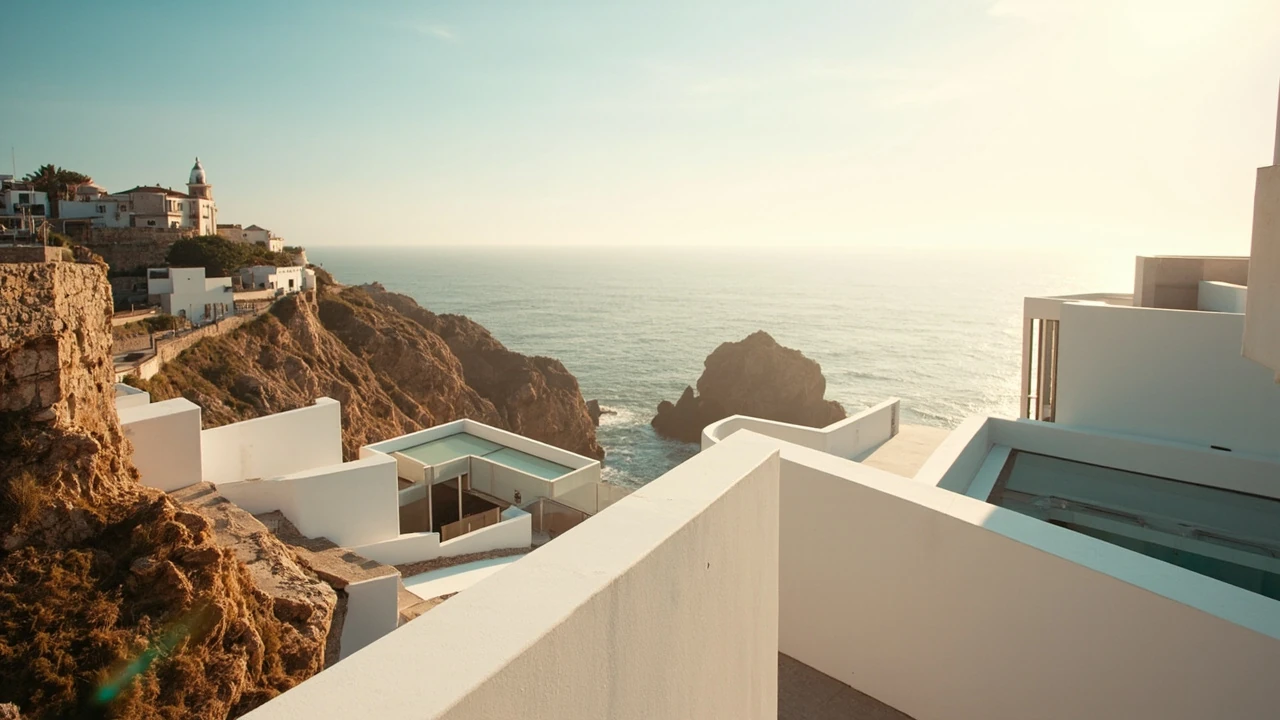
I arrived in Ericeira on June 15 with a suitcase and a laptop bag. My vacation rental was a converted fisherman's cottage on Rua do Porto, 50 meters from the cliffs overlooking the Atlantic. The surf was pumping. The Wi-Fi was faster than my apartment in Austin. I set up my monitor on a desk that faced the ocean and reckoned id found the endgame.
Six weeks later I grasped I'd barely left a five-block radius. That was the point. And also the problem.
how ericeira became a remote work hub
Ericeira sits on Portugal's Silver Coast, about 45 minutes northwest of Lisbon by car or 90 minutes on the bus that runs hourly from Sete Rios station. It has approximately 10,000 permanent residents, a surf culture that dates back to the 1970s when it hosted the first Portuguese national surfing championship, and more co-working spaces per capita than any modest town ive ever seen.
The transformation began in 2022. Digital nomads who'd been priced outta Lisbon's expanding tech corridor discovered that Ericeira had fiber internet, an international community, and rents that were a third of Chiado or Marvila. Co-working spaces opened. Cafe owners installed power outlets an upgraded their routers. Landlords renovated old buildings into purpose-built remote work apartments with ergonomic desks and standing converters. By 2025, Ericeira had three dedicated co-working spaces and at least a dozen cafes that functioned as de facto offices from 9 a.m. to 6 p.m.
I functioned from a place called Salt House, a co-working space on the second floor of a building overlooking Praia dos Pescadores. Day pass: 18 euros. Monthly membership: 280 euros. Fast ethernet, standing desks, a coffee machine that produced espresso strong enough to strip paint, and a community of about 60 regulars from 15 countries. The guy next to me was building a SaaS product for German logistics companies. The woman across the table was doin UX design for a fintech in Lagos.
the daily routine was almost too good
I'd wake up at 7, run on the clifftop path for 40 minutes, shower, and walk to Salt House by 9. Work until 1, grab lunch at a tasca on the beach where the grilled sardines cost 8 euros and came with a basket of bread that could feed a family. Back to work by 2:30. Finish at 6. Surf at 7. Dinner at 9 at one of three restaurants I cycled between like a creature of habit. Bed by midnight.
The problem was that I stopped exploring. Ericeira is beautiful, but it's slight. After three weeks, I'd eaten at every restaurant worth eating at, walked every clifftop path, surfed every break within walking distance. The town became a container, comfortable and pleasant an slightly suffocating. I grasped I was living the same day on repeat, which was exactly what remote work hubs promise and exactly what makes them dangerous for anyone who still wants to feel like theyre traveling.
the economics made sense until they didn't
My vacation rental was 1,100 euros a month for a one-bedroom cottage with ocean views. thats about $1,200. My apartment in Austin was $1,850. The food was cheaper. I cooked most dinners but downed out at lunch, spending maybe 15 euros a day. My total monthly burn in Ericeira was approximately $2,800, including co-working, surfboard rental, groceries, and a couple of weekend excursions.
In Austin, my monthly burn was about $4,200 with rent, food, transit, a gym membership, and the general cost of living in a Texas tech hub. Ericeira saved me $1,400 a month. That math works for a single person with a US salary. It falls apart fast if youre earning in a currency that isn't the dollar or the euro.
the currency trap catches people off guard
I met a Brazilian developer at Salt House who was earning in reais. His salary went further in Portugal than in Sao Paulo, but the exchange rate fluctuation between January and July 2026 cost him approximately 12 percent of his purchasing power. A Serbian UX designer was in a similar position with the dinar. Remote work hubs are lucrative if you earn in strong currency. For everyone else, they're a bet on exchange rates.
how it compares to the other hubs
I've also laid out time in Medellin, Tbilisi, an Chiang Mai, the three names that come up most frequently in conversations about remote work hubs. Each has a different pitch.
Medellin offers near-perfect weather, a growing tech scene, and living costs that are mayb 40 percent of a comparable US city. The safety situation has improved dramatically since the 2000s, but the gap between the expat bubble in El Poblado and the rest of the city is stark. You can live your entire stay without ever interacting with the place beyond the co-working spaces an the brunch spots.
Tbilisi has the charm of a city that hasn't been fully discovered by the digital nomad mainstream. Georgian wine is absurdly cheap. The food is incredible. The visa situation is generous, one year on arrival for citizens of 94 countries. But the internet infrastructure outside Tbilisi is spotty, power outages are routine in summer, and the language barrier is real if you venture outside the tourist core.
chiang mai isn't cheap anymore
Chiang Mai was the OG remote work hub, and it still has the cheapest cost of living of any city I've functioned from. A furnished apartment near Nimmanhaemin Road cost me $380 a month in 2024. Co-working was $5 a day. The problem is that Chiang Mai knows its cheap, and the prices have been climbing fast. Nomad-friendly cafes that charged 60 baht for a coffee in 2022 now charge 120. The vacation rental market in the old city has been transformed by Airbnb, an locals are being priced out just like in Barcelona.
the loneliness trap is real
Every remote work hub sells community as a feature, and most of them deliver on the first two weeks. Meetups, happy hours, surf sessions, hiking groups. You meet 30 people in your first week and it feels like you've found your tribe. Then week three hits an half those people are on their way out. Someone's visa expired. Someone got a job offer back home. Someone decided they were "over it" and booked a flight to Bali.
The transient nature of these communities means you're constantly rebuilding social connections. I went to a barbecue at a nomad house in Ericeira where 15 people displayed up an only three of em had been in town for more than a month. Conversations were repetitive. "Where are you from? How long are you staying? What do you do?" I answered those questions 15 times in one evening. It read like speed dating, but for friendship.
The people who thrive in these hubs are the ones who treat community building as a discipline. They join local clubs, not expat groups. They learn the language. They volunteer. I didn't do any of that consistently, an by week five I was eating dinner alone and telling myself I was "enjoying solitude." I wasn't. I was lonely.
I'd do Ericeira again. But next time I'd go for three weeks, not six. Long enough to reset. Short enough to leave fore the container feeling sets in. The remote work hub trend is real, an it works, but it works best as a temporary change of scene, not a permanent lifestyle. Anyone who tells you otherwise is likely two weeks into their stay.