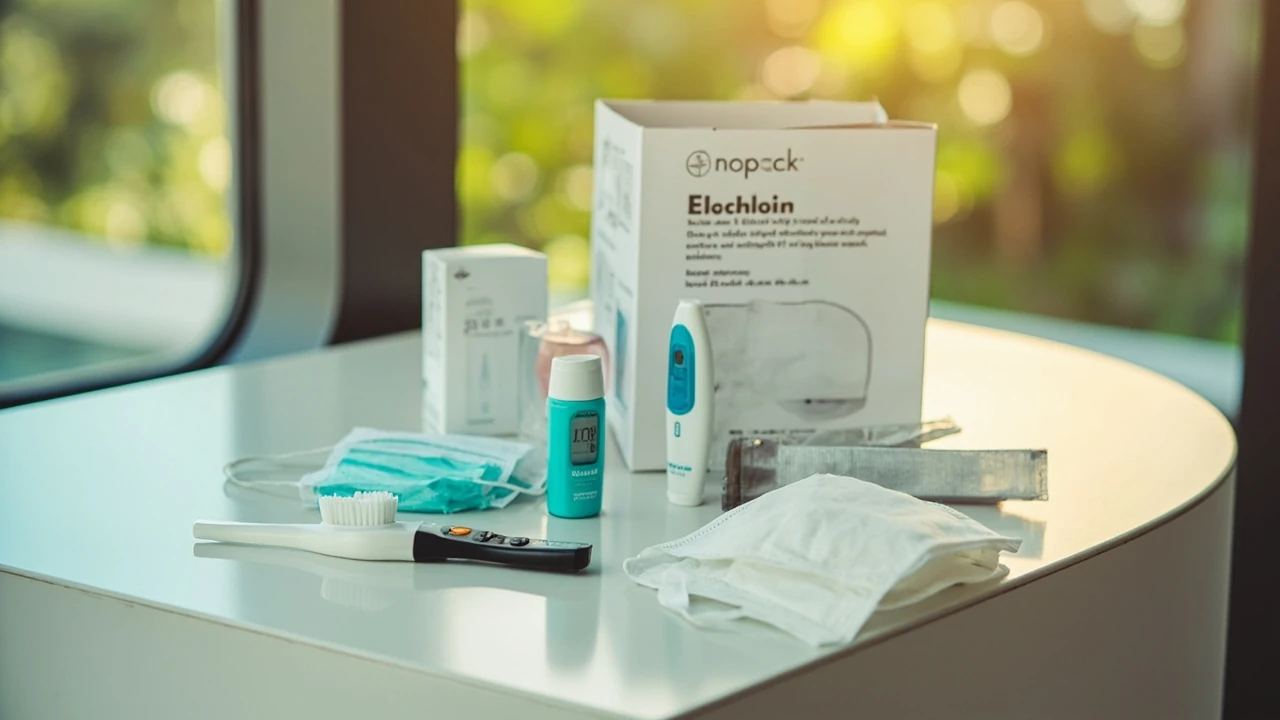
I unpacked my toiletry bag in a hotel in Kuala Lumpur last month an my travel companion stared at me. On the counter, next to my toothbrush and sunscreen, sat a digital thermometer, a pulse oximeter, a 10-pack of N95 masks, an a slight bottle of hand sanitizer with an expiration date from 2023. She asked if I invariably packed like this. I said yes. She asked why. I said I wasn't sure anymore.
the refundable booking obsession
In March 2020, I had flights to Tokyo, a hotel in Shibuya, and tickets to a Sumo tournament at Ryogoku Kokugikan. Total value: about $3,400. Non-refundable. I lost every penny of it. Japan closed its borders, the Olympics were postponed, an my travel insurance, which I'd purchased through a timeshare cancellation package that a friend had talked me into, covered "trip interruption due to supplier bankruptcy" but not "global pandemic border closures."
I remember sitting on my couch in Chicago reading the policy language and feeling a rage that surprised me. It wasn't about the money. It was about the helplessness. I'd done everything right. I'd booked early. I'd snagged insurance. And none of it mattered cuz the policy was written for a world where something like a global border closure simply didnt happen.
Since then, I have not booked a single non-refundable flight, hotel, or tour. Not one. My travel rewards credit card offers refund protection on some bookings, but I dont rely on it. I pay the premium for flexibility, typically 15 to 25 percent more than the non-refundable rate, every single time. My husband thinks I'm being irrational. The data suggests he might be right. I've only actually cancelled two bookings since 2022, an both were for personal reasons, not pandemic-related.
But the feeling of being trapped with a non-refundable booking during a global shutdown left a mark. I tracked my spending on refundable vs. non-refundable options over four years. The premium cost me approximately $2,100 extra. thats less than I lost in 2020. I'll keep paying it.
the health anxiety doesn't fully go away
I got COVID in December 2022, long after most people had moved on. It wasn't severe, just a week of brain fog and a cough that lingered for three weeks. But the experience of being sick in a foreign country, even a country with excellent healthcare like Japan where I caught it during a business trip, was truly frightening. My hotel quarantined me in my room. I ordered food thru delivery apps. I spoke to a doctor by video call who prescribed Paxlovid, which arrived at my door in four hours, the Japanese pharmacy efficiency was remarkable.
I recovered fully. The anxiety didn't. I now research the healthcare system of every country I visit fore booking. I know that Thailand's medical tourism industry serves over a million international patients annually. I know that Spain's public healthcare system covers EU citizens but not Americans. I know that in Tanzania, the nearest hospital with a proper ICU might be six hours from your safari lodge.
the insurance i'll never skip
I carry travel health insurance that covers emergency evacuation, hospitalization, and repatriation. The policy costs me $425 a year for worldwide coverage. I've rarely used it. I will rarely travel without it. A cruise booking might seem low-risk in 2026, but if you're on a ship in the middle of the Atlantic an somethin goes wrong, that evacuation coverage is the difference between a helicopter ride to a hospital in the Azores and a awfully bad outcome.
the way we choose destinations changed permanently
Fore 2020, my travel decisions were driven by curiosity, cost, an Instagram. In that order. After 2020, safety infrastructure became the first filter. I've narrowed down my decision process to something I can almost automate: Does the destination have reliable healthcare? Is the hospital within an hour of where I'm staying? Does the country have a functioning emergency medical system? How easy is it to get a doctor who speaks English or French?
This sounds paranoid. I know it sounds paranoid. But I've traveled to 28 countries since the pandemic ended, an in four of them, either I or someone I was traveling with needed medical attention. Food poisoning in Mexico. An allergic reaction in Thailand. A sprained ankle hiking in Madeira. My husband's asthma flare-up in Marrakech, triggered by the dust in the Medina. In every case, knowing where the nearest clinic was made the difference between a minor incident and a major crisis.
My travel agency now includes a "health infrastructure summary" with every itinerary they build for me. Hospital locations, emergency numbers, whether the country accepts international travel insurance, and the availability of English-speaking medical staff. They began offering this as a standard feature in 2023 after enough clients requested it. It wasn't a standard feature in 2019.
social distancing crept into my travel permanently
I choose hotels with private balconies. I book restaurant tables on patios or terraces rather of indoors. I pick vacation rentals with private entrances over apartments in shared buildings. I look for train journeys where I can book a seat with an empty adjacent seat. I board flights last to avoid the boarding crush.
Some of these are preferences I might have developed anyway. The private balcony thing is honestly nice regardless of any pandemic association. But the pattern is consistent enough that I recognize it as a behavioral shift rooted in the lockdown experience. I don't like crowds anymore. Not in the agoraphobic sense, I still go to concerts and markets and busy streets. But in the travel context, where im paying for comfort and can control the variables, I choose space.
This has real implications for the travel industry. Demand for private accommodations over shared ones has remained elevated above pre-2020 levels for six consecutive years, according to Airbnb's quarterly earnings reports. Hotel chains have responded by adding more suites an fewer standard rooms in fresh constructions. Even budget airlines have began promoting "extra legroom" seats as health-conscious products, not just comfort upgrades.
the industry noticed the shift
the pandemic gave travel a weight it didn't have before
In 2019, travel was entertainment. Fun, exciting, sometimes transformative, but fundamentally optional. You could skip a year, miss a trip, cancel plans, and nothin much changed. The pandemic made travel feel precious in a way I hadn't anticipated. When the borders closed and I couldn't go anywhere, the things I missed werent the fancy resorts or the Instagrammable moments. I missed standing in a convenience store in Osaka at midnight, eating onigiri and watching salarymen buy beer. I missed the smell of the Marrakech medina at dusk, a mix of spices and exhaust and roasting meat. I missed the specific sensation of waking up in a place where everythin was unfamiliar.
Those arent extraordinary experiences. They're the mundane texture of travel, the slight moments that accumulate into the feeling of being somewhere else. Losing access to them, even temporarily, made me value them differently. Now when I travel, I notice more. I walk slower. I sit in cafes without my phone. I eat street food without photographing it first.
The pandemic didnt just change how I travel. It changed why I travel. Before 2020, I traveled to accumulate experiences. After 2020, I travel cuz the ability to do so no longer feels guaranteed, and that fragility makes every trip feel heavier. I'm grateful for that shift, even if it came at a cost. The thermometer in my toiletry bag is just a symptom. The real change is deeper.