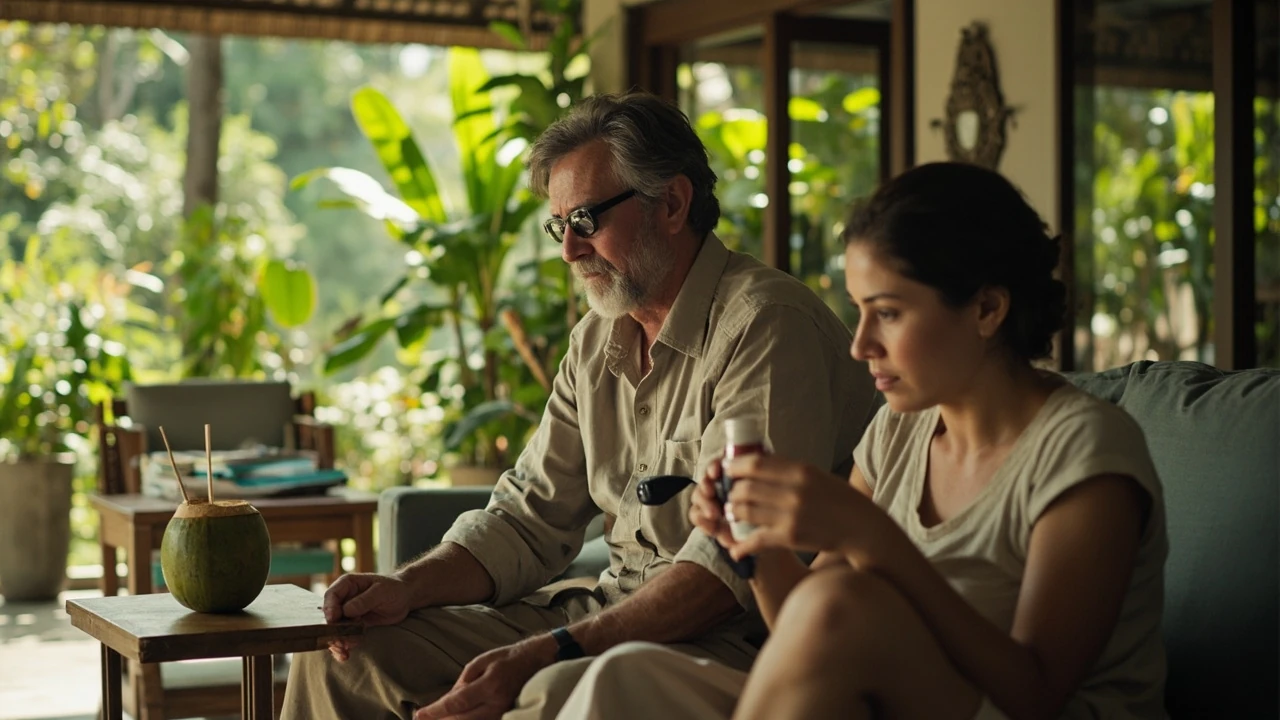
The cramps began at 3 AM on my third night in Ubud, right in the middle of what was sposed to be a sunrise trek to Mount Batur. I'd eaten a nasi goreng from a warung on Jalan Monkey Forest the evening fore—charred rice with egg an shrimp paste, served on a banana leaf, costing 25,000 rupiah, about $1.60. It tasted incredible. It also, as it turned out, tasted like the end of my vacation. For the next ninety-six hours I existed on coconut water, Oral Rehydration Salts, an the bathroom floor of a guesthouse where the flush mechanism was a bucket you filled from a rain barrel. I lost six pounds. I missed the trek, a cooking class I'd prepaid $18 for, and two days of exploring rice terraces that I'd flown eleven hours to see. The total cost of that $1.60 meal, including missed activities, clinic visit, and pharmacy runs, came to approximately $310. That math has haunted me ever since.
=== the travel pharmacy I never leave home without === After Bali I built a travel medical kit that lives in a waterproof pouch about the size of a sandwich bag. It contains Pepto-Bismol tablets (the chewable kind, because liquid gets flagged at security), Imodium AD for emergencies, a course of generic azithromycin (500mg, six tablets) prescribed by my doctor expressly for travel—this covers most bacterial diarrhea cases and costs about $12 with insurance, Cipro is the alternative if your doctor prefers it. I also carry ORS packets, ibuprofen, antihistamine pills, a slight tube of hydrocortisone cream for insect bites, band-aids, antiseptic wipes, and a digital thermometer that cost $7 at CVS. The whole kit costs about $45 to assemble an has saved me on three separate trips since Bali—in Colombia I got food poisoning from a ceviche cart in Cartagena and the azithromycin knocked it out in twenty-four hours, in India I used the antihistamines for a reaction to mosquito bites in Varanasi, and in Morocco the hydrocortisone cream was the only thing that stopped a sand flea rash from spreading across my ankles after a night in a desert camp near Merzouga. None of these replacements would have been easy to find at midnight in a foreign pharmacy where nobody speaks your language.
=== why I never skip the travel clinic appointment === Before Bali I didn't visit a travel clinic. I clocked, Indonesia is popular, it's developed, what could go wrong. Turns out quite alot. Bali had a rabies outbreak in 2024 that resulted in over 120 confirmed cases across the island, spread largely thru dog bites in the Ubud and Canggu areas. The pre-exposure rabies vaccine series—three shots over twenty-one days—costs about $300 in the US and is covered by some insurance plans. I didn't get it.
=== the vaccines that cost me $420 and were worth every penny === After researching all this post-Bali, I visited the travel clinic at UCSF Medical Center in January 2026 and got vaccines for typhoid, hepatitis A, hepatitis B, and rabies pre-exposure, plus a prescription for altitude sickness medication—acetazolamide—for an upcoming trip to Peru. I also skipped the typhoid vaccine, which costs about $80 and protects against a bacterial infection that kills approximately 200,000 people annually worldwide. The total out-of-pocket cost was about $420 with insurance, which sounds steep until you compare it to a single emergency room visit abroad, which can easily run $500 to $2,000 depending on the country an whether your travel insurance covers it up front or makes you pay and reimburse later.
=== the water rule that applies everywhere === I now follow one rule about drinking water regardless of country: bottled or boiled, nah exceptions. This includes ice, which is made from tap water in most developing countries, an includes brushing your teeth—use bottled water for that too. In countries with generally safe water like Japan or Singapore I relax slightly, but in Southeast Asia, Central America, Africa, and parts of South America, bottled water is non-negotiable. I also carry a LifeStraw Go water bottle with a built-in filter that removes 99.9% of bacteria and parasites. It cost $35 on Amazon and has been tested in river water in Laos and tap water in Guatemala—the water tasted fine and I rarely got sick from it. The filter lasts for about 1,000 gallons, which at my usage rate means it'll last about four years of regular travel. In restaurants where bottled water isnt available, I ask for drinks without ice—"sin hielo" in Spanish, "mai nam kaeng" in Thai—and if the waiter seems confused I just order a beer rather. Life is too short to spend it on a bathroom floor.
=== the jet lag protocol that actually works === Jet lag isn't exactly an illness, but it can feel like one, and it directly affects your immune system, which makes you more vulnerable to everything else. I've flown long-haul routes approximately twenty times now—San Francisco to Tokyo, Fresh York to Bangkok, London to Sydney—and I've hammered out a protocol that reduces my recovery time from five or six days down to about two. The day before flying east, I shift my bedtime one hour earlier and avoid screens after 9 PM. On the flight, I set my watch to the destination timezone immediately and sleep according to that clock—if it's 11 PM in Tokyo even tho it's 7 AM at home, I close the window shade and try to sleep. Melatonin helps here—a 3mg tablet about thirty minutes before the target bedtime on the plane. Upon arrival, I stay awake til at least 9 PM local time, take a second melatonin, and force myself thru the first mornin on sunlight and coffee. The second day is invariably rough, but by day three I'm typically functional. I've been doin this since a disastrous trip to Seoul in 2023 where I laid out four days sleeping twelve hours and being awake twelve hours, fully unable to string a coherent sentence together during business meetings scheduled at 9 AM local time.
=== the hotel booking that included a world-class clinic === I keep a list of hospitals and clinics for every destination I visit, researched in advance using the International Association for Medical Assistance to Travellers database. Bangkok Hospital, Bumrungrad International in Thailand, an the Adventist Hospital in Penang are all world-class facilities where English-speaking doctors treat you for prices that would make an American radiologist weep. I've rarely had to visit one of these facilities yet, but knowing they exist and having the addresses saved offline in my phone gives me a baseline level of confidence that I lacked in Bali when I was desperately Googling "English speaking doctor near me" at 2 AM.
=== when to stop self-treating and find a real doctor === My biggest health-related travel mistake wasn't gettin sick—it was waiting too long to see a professional. In Bali I tried to self-treat for two days with Imodium and coconut water fore a fellow guest at my homestay practically dragged me to a clinic in central Ubud called Bali Mandara, where a doctor named Dr. Ketut diagnosed a bacterial infection, prescribed azithromycin, an gave me an IV drip for dehydration. Total cost: $45. I read better within eighteen hours. If I'd gone to the clinic on day one rather of day three, I'd have saved myself forty-eight hours of misery and prolly recovered in time for the Mount Batur trek. The rule I follow now is straightforward: if symptoms last more than twenty-four hours despite self-treatment, or if there's blood, fever above 101°F, or severe dehydration symptoms (dark urine, dizziness, extreme thirst), I go to a clinic immediately. Every major tourist destination has a clinic usta dealing with foreigners, and in most cases the cost is a fraction of what you'd pay at home. Bangkok Hospital, Bumrungrad International, and the Adventist Hospital in Penang are all world-class facilities where English-speaking doctors treat you for prices that would make an American radiologist weep.