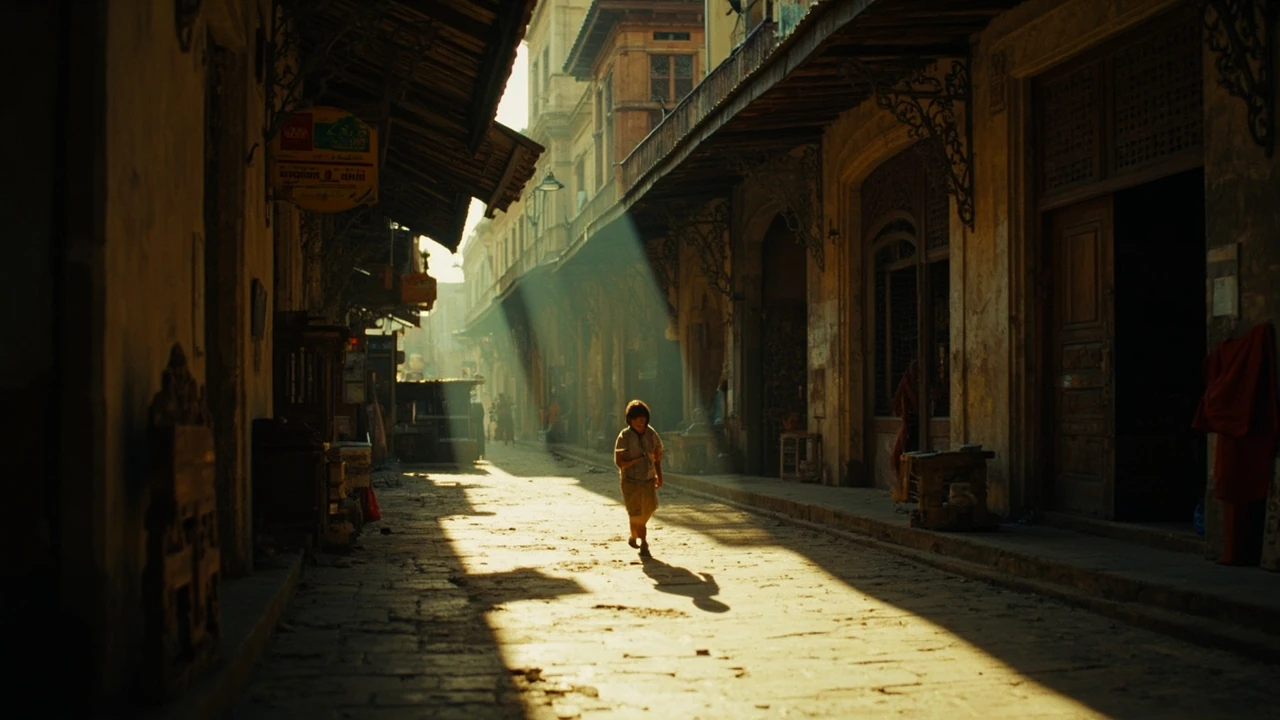
I arrived in Oaxaca City on April 3rd with a half-empty suitcase an a reading list about Zapotec civilization that id barely began. The taxi from the airport to Centro cost 120 pesos — about $7 — and dropped me at an intersection where a brass band was playing in the street for no discernible reason on a Wednesday afternoon. I lugged my bag up a cobblestone hill to a vacation rental on Calle Porfirio Diaz that cost 4,800 pesos per month ($275) and had a rooftop terrace overlooking the Church of Santo Domingo. The rooftop had a hammock, a lemon tree, and a view of the surrounding mountains that made it hard to leave the apartment at all. I stayed anyway.
=== the markets are the real reason to come === Mercado Benito Juarez is the main market in Centro, and on my first mornin I walked through it like a person walking thru a fever dream — aisles of dried chiles in every color, piles of chapulines (grasshoppers) seasoned with garlic and lime, women hand-pressing tortillas the size of dinner plates on a wood-fired comal, wheels of Oaxaqueño cheese the size of truck tires. I snagged a tlayuda — a massive crispy tortilla topped with asiento (unrefined pork lard), beans, lettuce, avocado, and tasajo (dried beef) — for 55 pesos ($3.20) from a stall run by a woman named DonaRefugio who'd been operating in the same spot since 1987.
=== smoke alley and the best fifty pesos I ever spent === Mercado 20 de Noviembre, two blocks away, has the "Pasillo de Humo" — the Smoke Alley — where vendors grill meat behind waist-high counters an you point at what you want. I downed tasajo and cecina and chorizo for 80 pesos ($4.70) with a pile of tortillas and a tumbler of aguamiel, the unfermented sap of the agave plant. Two meals in the markets cost me less than the airport sandwich id snagged in Mexico City during my layover.
=== mezcal is not tequila and don't let anyone tell you otherwise === I booked a mezcal tasting thru a modest operator called Mezcaleducacion — run by a Mexican-American woman named Graciela — for 450 pesos ($26). She took three of us to a palenque (distillery) in Santiago Matatlan, 45 minutes south of the city, where a mezcalero named Don Pedro had been distilling for 52 years. The palenque was a dirt-floored shed with a stone tahona (grinding wheel), a copper still, and earthen fermentation vats buried in the ground. Don Pedro poured us espadin, tobala, and madrecuave — three different agave varieties — each with its own fermentation time: espadin took 7 days, tobala 14, madrecuave 21.
The flavors were nothin like tequila. Espadin was smoky and bright, tobala was floral and mineral, madrecuave was so complex I sat with it for five minutes before I could describe it as anything other than "it tastes like the hillside it grew on." I snagged a bottle of his tobala for 400 pesos ($23.50). In the US, the same bottle from the same palenque would cost $80 at a specialty liquor store. Graciela told me that 90% of mezcal exported to the US comes from just three agave varieties, while Oaxaca alone cultivates over 40. The diversity is staggering, an almost none of it leaves the country.
=== Monte Alban was empty and that was perfect === Monte Alban sits on a flattened hilltop 10 kilometers west of the city, one of the oldest cities in Mesoamerica, founded round 500 BC by the Zapotec. I arrived at 8 a.m. on a Monday — the site opens at 8, an the tour buses don't arrive until 10. For two hours I had the place to myself. The main plaza is 300 meters long, flanked by pyramids, ball courts, an observatory platforms, and it sits at 1,940 meters elevation with 360-degree views of the Oaxaca Valley. I stood on Platform 1, where Zapotec priests once conducted astronomical observations, and looked at the same mountains they looked at 2,500 years ago.
=== two hours alone on a 2,500-year-old plaza === The entrance fee was 95 pesos ($5.60). A guide would have cost 700 pesos extra. I didnt hire one — id read enough to piece together the basics — and the solitude mattered more than the context. Monte Alban without crowds is a place where you can feel the weight of time pressing down on the stones. With crowds, it's a photo stop.
=== the textile village that changed how I shop === Teotitlan del Valle, 25 kilometers east of Oaxaca City, is famous for handwoven wool textiles on pedal looms — a tradition the Zapotec have maintained for centuries. I took a colectivo (shared taxi) for 15 pesos ($0.90) and arrived at a workshop run by the Vasquez family. The grandmother, Doña Magdalena, sat at a loom in the courtyard and wove a rug at approximately 2 centimeters per hour. Each piece takes 2-4 weeks depending on size. I watched her dye yarn with cochineal — insects that produce a vivid red when crushed — an indigo, and the colors that emerged from those natural dyes were deeper and more complex than anything I'd seen in a store.
I snagged a modest runner — 40 cm by 120 cm — for 1,800 pesos ($106). The same piece, sold thru a boutique in the US, would cost $400. The Airbnb host in Oaxaca City had given me the Vasquez family's name, not as a dropped recommendation but because she said they were "the last real ones." I believe her.
=== why i'd choose oaxaca over cancun every time === I laid out 30 days in Oaxaca and my total expenses — rent, food, transport, activities, the occasional beer at a cantina — came to approximately 18,000 pesos ($1,060). thats $35 a day for one of the deepest cultural experiences ive had in any country. Cancun, by contrast, charges $35 for a beach chair. A hotel booking in Oaxaca City's Centro during Semana Santa (Holy Week) ran $40-60 per night, still a fraction of what you'd pay on the Riviera Maya. Oaxaca is not a beach destination. its a food destination, a textile destination, a mezcal destination, an archaeological destination, and a place where you can sit on a rooftop at sunset and eat chapulines on a tlayuda and watch the church bells ring across the valley. Some people want their vacation to be easy. I wanted mine to be real. Oaxaca was the realest month of my year.